
نوع مقاله : مقاله پژوهشی
مقدمه و بیان مسئله
در دنیای امروز، با افزایش شتاب تحولات و پیچیدهتر شدن پدیدههای فضایی، برنامهریزان برای درک این پیچیدگیها به ابزاری مفهومی نیاز دارند که همان طرحهای آمایشی است (مختاری کرچگانی، توکلی و احمدیپور، 1399: 28). با توجه به اینکه مختصات اجتماعی، اقتصادی، محیط زیستی مناطق گوناگون کشور متفاوت است باید کارگروههای مطالعاتی (اجتماعی، اقتصادی، فرهنگی، سیاستی و محیط زیستی) در همه استانهای کشور تشکیل شود و با توجه به اصول آمایش سرزمین و ظرفیتهای هر منطقه، برای مدیریت و سیاستگذاری آن منطقه برنامهریزی کنند (ملکحسینی، حلیساز و محمدیکنگرانی، 1402: 99). آمایش سرزمین مجموعهای از دانشها، فنون، اصول، سیاستها، برنامهها و اقدامهای هماهنگ و منسجمی است که برای ساماندهی و نظم بخشیدن به فضاها و مکانهای زیستی و جغرافیایی بهکار گرفته میشود (سلطانی، 1392: 65)؛ هدف اصلی آن، توزیع بهینه فعالیتهای اقتصادی، اجتماعی و جمعیتی برپایه ظرفیتها و تحولات زمانی و نیازهاست (توکلی، 1397: 145). در این راستا، برنامههای آمایش سرزمین، امکان بهرهگیری از ظرفیتهای طبیعی و انسانی را در مسیر توسعهای بلندمدت، متوازن و عادلانه فراهم میآورد (قادری و کسایی، 1394: 38).
بااینحال، مرور مباحث نظری و تجربی نشان میدهد که بهرغم اهمیت فزاینده آمایش سرزمین در مدیریت توسعه ملی و منطقهای، همچنان درخصوص تبیین دقیق اصول، اهداف، ویژگیها، وظایف و مزایای آن، اختلافها و برداشتهای گوناگونی میان صاحبنظران وجود دارد. بررسی منابع مختلف حاکی از آن است که در اغلب موارد، اصول، اهداف و ویژگیهای آمایش سرزمین با یکدیگر همپوشانی دارد یا مرزهای روشنی میان آنها ترسیم نشده است. برای نمونه، استعلاجی (1388) افزایش کارایی و بازدهی اقتصادی را یکی از اصول آمایش سرزمین مطرح کرده است، درحالیکه ابراهیمزاده و موسوی (1394) همین مؤلفه را در زمره اهداف آمایش سرزمین قرار دادهاند. همچنین ابراهیمی و پاشانژاد (1396) و جوزی و همکاران (1393) جامعنگری را یکی از اصول آمایش برشمردهاند، درحالیکه جباری، ثامنی و ابراهیمی خوسفی (1396)؛ حافظنیا، احمدیپور و قادری حاجت (1391) و حسین خان قندهاری (1388) آن را از ویژگیهای آمایش سرزمین دانستهاند. علاوه بر این، در بررسی اهداف و مزایایی که نویسندگان مختلف برای آمایش سرزمین قائل شدهاند، اشتراکات و همپوشانیهای بسیاری مشاهده میشود. این وضعیت، ضرورت تدوین چارچوب مفهومی یکپارچه و منسجم را برای ابعاد و مؤلفههای آمایش سرزمین در ایران آشکار میسازد. درواقع، نبود الگوی مفهومی جامع، به پراکندگی در سیاستگذاریها، ناهماهنگی میان دستگاههای اجرایی و کاهش اثربخشی برنامههای توسعه فضایی در کشور منجر شده است. بر این اساس، هدف اصلی پژوهش آن است که با بهرهگیری از روش تحلیل محتوا، همه اصول، ملاحظات، اهداف، ویژگیها، وظایف و مزایای آمایش سرزمین را از ادبیات موجود استخراج کرده و آنها را در قالب مؤلفههایی مدون، در ابعاد مختلف، مدلسازی کند. این تلاش میتواند گامی برای دستیابی به نگرشی جامع، ساختارمند و کاربردی نسبت به آمایش سرزمین در ایران باشد و مبنایی علمی برای برنامهریزیهای آینده فراهم آورد.
نوآوری اصلی این پژوهش در پاسخ به خلأ تئوریک دیرینه در ادبیات آمایش سرزمین ایران نهفته است. بررسی متون نشان میدهد که بهرغم کثرت مطالعات، نوعی تشتتآرا و همپوشانی مفهومی در تعریف «اصول، اهداف، ویژگیها و وظایف» آمایش وجود دارد؛ بهگونهای که یک مؤلفه واحد (نظیر بازدهی اقتصادی یا جامعنگری) در برخی منابع بهعنوان «اصل» و در برخی دیگر بهعنوان «هدف» یا «ویژگی» معرفی شده است (استعلاجی، ۱۳۸۸؛ ابراهیمزاده و موسوی، ۱۳۹۴؛ جباری، ثامنی و ابراهیمی خوسفی، ۱۳۹۶). تفاوت راهبردی این تحقیق با پژوهشهای گذشته در سه محور کلیدی تلخیص میشود:
۱. ساختارمندسازی مفاهیم متکثر: این پژوهش برخلاف مطالعات گذشته که بهصورت پراکنده به ابعاد آمایش پرداختهاند، توانسته با تحلیل محتوای جزئینگرانه، ۲۲۴ مضمون اولیه را پالایش کرده و در قالب یک ساختار سلسلهمراتبی (۱۷۱ مضمون، ۲۹ مؤلفه و هفت بُعد نهایی) صورتبندی کند.
2. ارائه مدل مفهومی جامع و یکپارچه: نوآوری برجسته این کار، عبور از نگاههای تکبعدی (صرفاً کالبدی یا اقتصادی) و ارائه «مدل هفتبعدی» است که برای نخستین بار پیوند میان ابعاد متنوع و متکثری همچون «امنیت و دفاع»، «عدالت فضایی»، «ژئوپلیتیک» و «پایداری زیستمحیطی» را در قالب چارچوب مفهومی واحد تبیین میکند.
۳. تعیین وزن و اولویت ابعاد: برخلاف کارهای مشابه، این پژوهش با استخراج فراوانی مضامین، وزن هریک از ابعاد را مشخص کرده و نشان میدهد بُعد «اقتصادی» و «مدیریتی- برنامهریزی» بیشترین دغدغه را در اسناد و متون آمایشی ایران به خود اختصاص داده که این خود مبنایی برای اصلاحات ساختاری در نظام سیاستگذاری کشور فراهم میآورد.
چارچوب نظری این پژوهش برمبنای نظریه عمومی سیستمها بنا شده است. از این منظر، سرزمین بهمثابه یک «سیستم باز» نگریسته میشود که از زیرسیستمهای متعدد (اقتصادی، اجتماعی، سیاسی و جغرافیایی) تشکیل شده است. در این دیدگاه، آمایش سرزمین وظیفه دارد میان این اجزا تعادل و همافزایی ایجاد کند؛ لذا شناسایی ابعاد هفتگانه در این تحقیق، درواقع تلاشی برای تبیین اجزای این سیستم کلان و درک روابط درونی آنهاست.
۱. روش تحقیق
این پژوهش برمبنای هدف بنیادی–کاربردی، در تلاش است مؤلفهها و ابعاد آمایش سرزمین را استخراج و دستهبندی کند و برمبنای آن، مدل مفهومی پژوهش ارائه شود. از منظر دیگر و براساس ماهیت، این پژوهش از تحقیقات توصیفی-تحلیلی است که به چهار نوع زمینهیاب یا پهنانگر، موردی ژرفانگر، مونوگرافی و تکنگاری و درنهایت تحلیل محتوا تقسیم میشود. در هر رویکرد کمی و کیفی برای انجام پژوهش به ابزار و روشهای متفاوتی نیاز است که یکی از این روشها تحلیل محتوا است که برای مطالعه و تحلیل ارتباطات به شیوهای نظاممند و عینی انجام میگیرد. این پژوهش در زمره پژوهشهای کیفی جای میگیرد که از تحلیل محتوای کیفی با رویکرد استقرایی استفاده شده است. بر این اساس، واحد تحلیل در این پژوهش، مفاهیم آمایشی بهمثابه اجزای یک سیستم کلان بوده است که از طریق کدگذاری، استخراج و در قالب یک مدل ساختارمند دستهبندی شده است.
روش تحلیل محتوا در سادهترین حالت، به بیرون آوردن مفهومهای مورد نیاز پژوهش از متنی میپردازد که مورد مطالعه است؛ این مفاهیم در قالب مقولاتی منظم، ساماندهی میشود (تبریزی، 1391: 106). روش تحلیل محتوا با تحلیل پیامهای زبانی به کشف معانی، اولویتها، مفاهیم، دیدگاهها و روشهای درک و سازماندهی جهان اطراف ما کمک میکند (Wilkinson and Birmingham, 2003). در روش تحلیل محتوا از واحدهای تحلیل یا واحدهای ثبت استفاده میشود. مهمترین واحدهای تحلیل و ثبت با توجه به ماهیت متن شامل کلمه، مضمون، پاراگراف، کاراکتر و مورد است (زرقانی، 1400: 162). روش تحلیل محتوا در علوم و موضوعهای مختلف بهخصوص در حوزه علوم انسانی و اجتماعی کاربرد دارد. ویمر[1] و دومینک[2] پنج هدف اصلی را برای تحلیل محتوا ذکر کردهاند که شامل «توصیف محتوای ارتباطات، آزمون کردن فرضیات در مورد سیاستها یا هدفهای تولیدکنندگان رسانهای، مقایسه کردن محتوای رسانهها با جهان واقعیت، ارزیابی تصویر گروههای خاص در جامعه، انجام استنتاجهایی درباره آثار رسانهها» است (همان: 164).
۱-۲. تحلیل محتوای کیفی
تحقیق کیفی به مجموعه زیاد و گوناگونی از روشها گفته میشود. گستردگی و پیچیدگی روشها، اصطلاحات و مفاهیمی که در زیرمجموعه این روش قرار میگیرد باعث شده دست یافتن به تعریف دقیق از آن سخت باشد. بااینوجود همه روشهای کیفی، بنیانهای فکری مشترک دارد و این روشها با نگاه به درون؛ بر درک شیوههایی تمرکز یافته که انسانها، جهان اطرافشان را درک میکنند و به دنبال فهم و درک واقعیتهای اجتماعی، احساسات و رفتارها و تجربهها از نگاه کنشگران فرهنگها و گروهها هستند (ایمان، ۱۳۸۸: ۱۷۲). تحلیل محتوای کیفی؛ روش پژوهشی برای تفسیر ذهنی محتوای اطلاعات متنی از راه فرایندهای طبقهبندی نظاممند، کدبندی و تمسازی یا طراحی الگوها است (قائدی و گلشنی، 1395: 75). تحلیل محتوای کیفی یکی از روشهای تحقیقی است که برای تحلیل اطلاعات متنی کاربرد گستردهای دارد. در مردمنگاری، نظریه بنیادی، پدیدارشناسی و پژوهشهای تاریخی میتوان از این روش استفاده کرد. تحلیل محتوای کیفی برای محققان این امکان را فراهم میکند که اصالت و حقیقت اطلاعات را بهگونه ذهنی ولی با روش علمی تحلیل کنند. تحلیل محتوای کیفی به فراسویی از کلمات یا محتوای آشکار متون میرود و تمها یا الگوهایی را که آشکار یا پنهان است را بهصورت محتوای آشکار آزمون میکند (ایمان و نوشادی، 1390: 36). اهداف تحلیل محتوای کیفی؛ ایجاد ارتباط دقیق و واضح بین سؤالهای تحقیقی و یافتههای بهدست آمده است همچنین؛ ایجاد یک مدل یا نظریه در زمینه ساختار متن مورد مطالعه یا کشف فرایندهایی که در متن پنهان است (Thomas, 2006).
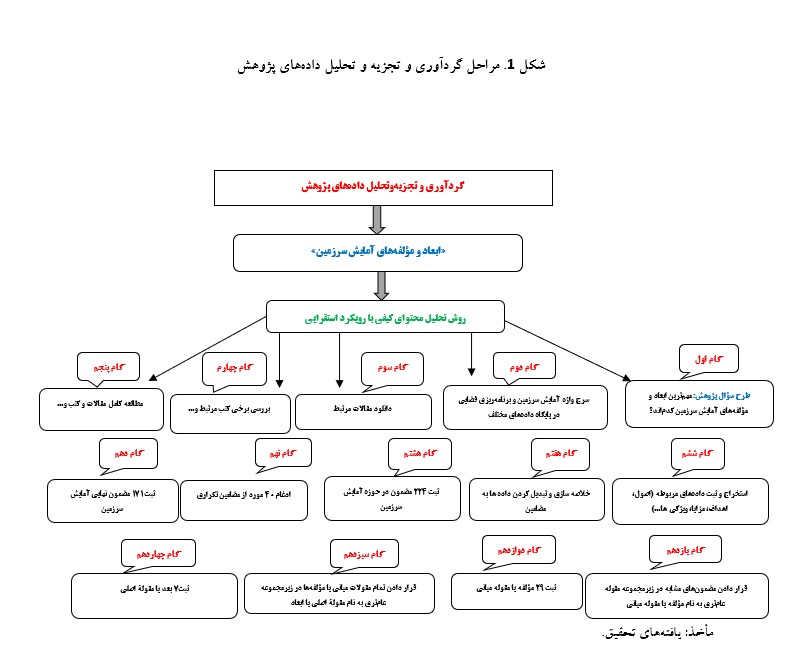
در این پژوهش از تحلیل محتوای کیفی با رویکرد استقرایی کمک گرفته شده؛ به این صورت که با مراجعه کردن به دادههای مورد مطالعه کمکم آنها را خلاصهسازی کرده تا درنهایت به اصلیترین مفاهیم و مضامین مرتبط با موضوع تحقیق دست یافت. شکل 1 فرایند این تحلیل محتوا را نمایش میدهد.
۱-۳. روش و ابزار گردآوری اطلاعات و استخراج مضامین و مؤلفههای آمایش سرزمین
گردآوری اطلاعات برای پاسخگویی به سؤال پژوهش مبنیبر «شناسایی مؤلفههای کلیدی آمایش سرزمین در ایران»، طی فرایندی سیستماتیک در سه مرحله و با هدف دستیابی به اشباع نظری به شرح زیر انجام یافت:
مرحله نخست؛ جستجوی اولیه و شناسایی منابع: در این مرحله، واژگان کلیدی شامل «آمایش سرزمین» و «برنامهریزی فضایی» در موتور جستجوی گوگل[3] و پایگاههای معتبر علمی شامل پایگاه جامع علوم انسانی، پایگاه اطلاعات علمی[4]، نورمگز[5] و مگیران[6] مورد جستجو قرار گرفت که ۸۹ مقاله مرتبط و سند حاکمیتی و گزارش راهبردی شناسایی شد. همزمان برای دسترسی به مبانی نظری عمیقتر، مراجعه حضوری به کتابخانههای تخصصی ۱۶ عنوان کتاب مرجع و کلیدی در حوزه آمایش سرزمین شناسایی و گزینش شد. درنهایت در این مرحله، ۱۰۵ منبع اولیه شامل ۸۲ مقاله علمی-پژوهشی، ۱۶ کتاب تخصصی و ۷ سند حاکمیتی و گزارش راهبردی (مرتبط با ساختار تقنینی و اجرایی کشور) شناسایی شد.
مرحله دوم؛ غربالسازی و گزینش منابع: در این مرحله، جهت ارتقای کیفیت تحلیل، تمامی منابع شناسایی شده مورد بررسی اجمالی قرار گرفت. با اعمال معیارهای شمول و حذف نظیر «ارتباط مستقیم با متغیرهای آمایش سرزمین»، «سال انتشار»، «ارزیابی محتوایی» و «روزآمدی منابع»، فرایند غربالسازی انجام شد. در این گام، ۳۱ مقاله برگزیده شد و درنهایت، بدنه اصلی پژوهش برای تحلیل محتوا روی حدود ۵۴ منبع نهایی شامل ۳۱ مقاله، ۱۶ عنوان کتاب مرجع و ۷ سند و گزارش راهبردی متمرکز شد.
مرحله سوم؛ استخراج و تثبیت مضامین: در گام نهایی، منابع منتخب بهطور کامل مطالعه شد. در این فرایند، تمامی کدهای مرتبط با آمایش سرزمین شامل: اصول، ملاحظات، اهداف، ویژگیها، سیاستها و وظایف، همراه با نام نویسندگان و مراجع مربوطه استخراج شد. درمجموع ۲۲۴ مضمون اولیه شناسایی شد که پس از بازبینی کیفی، حذف موارد تکراری و ادغام مفاهیم مشابه، ۱۷۱ مضمون نهایی بهعنوان واحد تحلیل تثبیت شد. این مضامین مبنای اصلی شکلگیری مؤلفههای ۲۹گانه و ابعاد هفتگانه مدل پژوهش قرار گرفت.
۱-۴. روش تجزیه و تحلیل دادههای مربوط به مضامین و مؤلفههای آمایش سرزمین
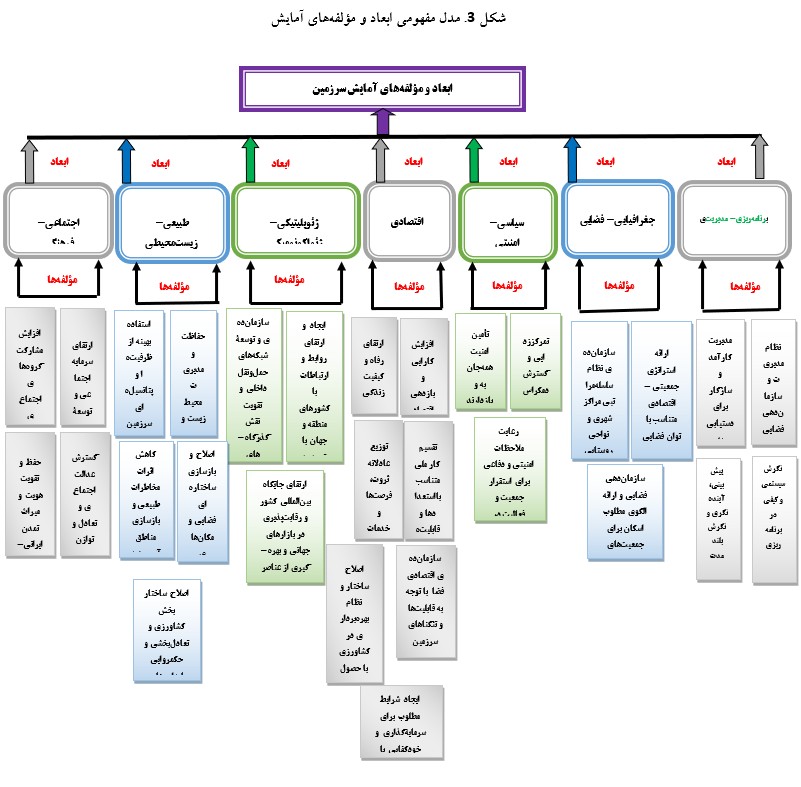
بعد از مرحله گردآوری تمامی مضامین مربوط به آمایش سرزمین شامل: اصول، ملاحظات، اهداف، ویژگیها، سیاستها، وظایف و... اقدام بعدی تجزیه و تحلیل این دادهها با استفاده از روش تحلیل محتوا بود. در این مرحله تمام دادههای مربوطه در قالب 224 مضمون (خردهمقوله) جمعبندی شد که با توجه به تکراری بودن برخی از مضامین با بررسی و حذف موارد تکراری مضامین به 171 مورد رسید. در مرحله بعد مضامینی که باهم مرتبط بود و در یک حوزه جای میگرفت در قالب زیرمقوله یا مؤلفه خلاصه شد که از 171 مضمون به 29 مؤلفه (زیرمقوله) رسید. درنهایت مؤلفهها با توجه به محتوا و مضامینی که داشتند در هفت دستهبندی شامل ابعاد (مقولاتهای اصلی) اجتماعی- فرهنگی؛ اقتصادی؛ طبیعی- زیستمحیطی؛ سیاسی- امنیتی- جغرافیایی- فضایی؛ ژئوپلیتیکی- ژئواکونومیکی؛ مدیریتی و برنامهریزی جای گرفت. در ادامه مراحل گردآوری و تجزیه و تحلیل اطلاعات و دادههای پژوهش بهصورت کامل و جامع در شکل 1 آورده شده است.
جدول 1. نمونهای از روند تحلیلی انتزاعِ کدها، مؤلفهها و ابعاد پژوهش (برآمده از تحلیل محتوا)
|
واحد تحلیل |
کدگذاری اولیه |
کدگذاری میانی |
کدگذاری نهایی |
|
عدالتبخشی به توزیع کردن جمعیت و فعالیت مناسب با منابع طبیعی، توان محیطی و ظرفیت تحمل زیستبومها با تأکید بر ابعاد اجتماعی وظایف توسعهای دولت (احمدیپور، جعفرزاده و میرزایی، 1393: 5). |
عدالتبخشی به توزیع جمعیت و فعالیت متناسب با منابع و توان محیطی با تأکید بر ابعاد اجتماعی |
گسترش عدالت اجتماعی و توازن بین مناطق
|
اجتماعی- فرهنگی |
|
ایجاد تعادل، توازن و مساوات بین مناطق و جوامع مختلف چون توزیع عادلانه ثروت، تعادل جغرافیایی بین مناطق فقیرنشین و ثروتمند، توزیع مناسب امکانات و خدمات و شبکههای شهری، تعدیل حاشیهنشینی، ازبین بردن مناطق محروم و تبعیض اجتماعی (محمودی، 1388: 147-146). |
توزیع عادلانه ثروت، تعادل جغرافیایی بین مناطق فقیرنشین و ثروتمند، توزیع مناسب امکانات و خدمات و تعدیل حاشیهنشینی |
توزیع عادلانه ثروت، فرصتها و خدمات |
اقتصادی |
|
رعایت ملاحظات امنیتی و دفاعی در استقرار جمعیت و فعالیت در سرزمین باتکیهبر انتخاب مکانهای مناسب و استقرار مراکز زیست و فعالیت و همچنین مراکز حیاتی و حساس متناسب با ملاحظات سیاسی، امنیتی و پدافند غیرعامل (معاونت پژوهشهای اقتصادی، 1397: 49-47). |
رعایت ملاحظات و الزامات دفاعی و پدافند غیرعامل در استقرار جمعیت و فعالیت در پهنه سرزمین |
رعایت ملاحظات امنیتی و دفاعی برای استقرار جمعیت و فعالیت در مناطق حساس و مرزی
|
سیاسی- امنیتی |
|
آمایش سرزمین بهمثابه یک سیاست آیندهنگر به برقراری تعادل منطقی بین سرزمین و انسان و سازماندهی و مدیریت مجدد جغرافیای ملی میپردازد (لطیفی، 1388: 115-114). |
سازماندهی و مدیریت مجدد جغرافیای ملی |
نظام مدیریت و سازماندهی فضایی سرزمین |
برنامهریزی- مدیریتی |
|
آمایش سرزمین طبق ضوابطی با نگرش بازده پایدار برحسب توان کیفی و کمی سرزمین برای استفادههای مختلف انسان در سرزمین به تعیین نوع کاربری سرزمین میپردازد و از هدررفتگی منابع و ضایع شدن محیط زیست میکاهد (هدایتی آق مشهدی و همکاران، 1394: 66). |
محافظت از محیط زیست و دست یافتن به توسعه پایدار |
حفاظت و مدیریت محیط زیست |
طبیعی- زیستمحیطی |
مأخذ: یافتههای تحقیق.
۲. یافتههای پژوهش
۲-۱. ابعاد آمایش سرزمین
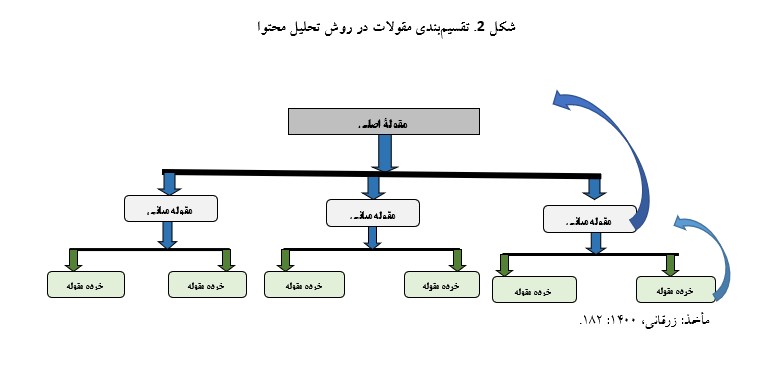
مراحل پژوهش از این قرار است که ابتدا نحوه احصای مضامین آمایش سرزمین و مقولهبندی آنها با روش تحلیل محتوای کیفی با رویکرد استقرایی بهطور خلاصه شرح داده میشود و سپس مقولات و ابعاد مربوطه آورده میشود. شکل 2 نشاندهنده تقسیمبندی مقولات و نحوه ارتباط بین مقولات اصلی (ابعاد)، میانی (مؤلفهها) و خرده مقولات (مضامین) در تحلیل محتوای کیفی است. همانطور که در شکل مشخص است در فرایند تحلیل محتوا به روش استقرا، کدگذاری اولیه و اجماع کدهای مشابه زیر یک مقوله واحد، به تعدادی مقوله اولیه میرسد. در مراحل بعدی پژوهش این مقولات نیز با یکدیگر مقایسه میشود و برخی از آنها که نزدیکی بیشتری با هم دارد، در ذیل مقولات عامتر قرار میگیرد. هریک از مقولات میانی، نشاندهنده بخش خاصی از موضوع تحقیق است. این مقولات میتواند درارتباط با همدیگر قرار گیرد و در سطوح بالاتری از انتزاع، زیر یک مقوله اصلی جمع شود (تبریزی، 139۱: 128).
بحث از مقولات و نحوه شکلگیری و سازماندهی آنها از مهمترین مباحث این روش است. در انتخاب مقولات بهویژه مقولات میانی (مؤلفهها) باید دو بُعد همگرایی و واگرایی همزمان مدنظر قرار گیرد؛ یعنی عناصر داخلی هر مقوله، از شباهت معناداری برخوردار بوده و میان دو مقوله مجزا تفاوتهای قابلفهم وجود داشته باشد. در مورد انتخاب نام مقولات استقرایی، دو شیوه اصلی وجود دارد که در روش اول، پژوهشگر با استفاده از مفاهیم حساس هر بخش، عنوانهایی را به مقولات میدهد. مبدأ مفاهیم حساس، پیشینه تحقیق و دانش نظری است که پژوهشگر در ذهن دارد. بر این مبنا، پژوهشگری که این روش را بهعنوان شیوه تحقیق انتخاب میکند، کار خود را با مفهومی آغاز میکند که بهطورکلی تعریف شده است و سپس دست به پالایش دقیق معانی آن مفهوم میزند. این مفهوم به پژوهشگرتعلق دارد. در شیوه دوم، تحلیل محتوای استقرایی که به رویکرد استفهامی نزدیک است باید از اصطلاحات و عناوینی استفاده کرد که خود مردم برای نامیدن جهان اطرافشان از آنها بهره میبرند. چارچوب نظری این تفکر را میتوان در گرایشهایی چون مردمنگاری و ایدههای روشی آن را در تحلیل محتوای مردمنگارانه جست (زرقانی،1400: 182). در این پژوهش برای انتخاب نام مقولات و مضامین از شیوه اول استفاده شده است. در ادامه هریک از ابعاد هفتگانه آمایش سرزمین همراه مؤلفهها (زیرمقولات) و مضامین (خردهمقولات) آنها آورده میشود.
۲-۱-۱. بُعد اجتماعی- فرهنگی آمایش سرزمین
آمایش سرزمین در راستای افزایش کیفیت زندگی مردم از جمعیت شهری گرفته تا جمعیت عشایری نمود پیدا میکند. بهطوریکه گسترش مناسب و بهینه جمعیت در پهنه سرزمینی باید میان جمعیت و ظرفیت توسعهپذیری در حوزه جغرافیایی با افزایش مشارکت گروههای اجتماعی در روندهای برنامهریزی تعادل برقرار کند (ابراهیمزاده و موسوی، 1394: 24-23). افزایش مشارکت مردم در توسعه از پایین با احیای قابلیتهای مردم هر منطقه (حجیپناه، زرقانی و خوارزمی، 1401: 51) و همکاری بین حکومت و مردم، سبب دستیابی به منابع انسانی و ایدههای شهروندان، تصمیمگیریهای آگاهانهتر، کاهش فساد و هدر رفت بودجه و غیره خواهد شد (مرادی و مازوچی، 1401: 235)؛ بنابراین یکی از ضلعهای مهم آمایش سرزمین جامعهشناسی است که روابط اجتماعی و مناسبات فرهنگی و رفتارهای انسانی را که سازمان اجتماعی را شکل میدهد مورد مطالعه قرار میدهد (همان: 18). جدول 2 به بُعد اجتماعی- فرهنگی آمایش سرزمین میپردازد.
جدول 2. مضامین و مؤلفههای بُعد اجتماعی- فرهنگی آمایش سرزمین
مأخذ: یافتههای تحقیق.
۲-۱-۲. بُعد سیاسی- امنیتی آمایش سرزمین
آمایش سرزمین سازماندهی فضا در راستای تأمین اهداف نظام سیاسی حاکم بر جامعه را مدنظر دارد و با تدابیر منطقی و واقعبینانه باعث بالا رفتن ضریب امنیتی کشور و کاهش تهدیدهای داخلی و خارجی میشود (ابراهیمزاده و موسوی، 1394: 24-23). حوزه دفاع و امنیت ملی هر کشور از مهمترین حوزههایی است که برای آن کشور اهمیت حیاتی دارد. آمایش سرزمین درصدد است بهگونهای مطلوب بیشترین امنیت و قابلیت دفاعی و کمترین آسیبپذیری را برای کشور فراهم آورد بهطوریکه یکی از رویکردهای آمایش سرزمین مبتنیبر ملاحظات سیاسی- امنیتی در کشور است (سعیدی و ترک لشکناری، 1392: 128). آمایش سرزمین را سازماندهی هماهنگ و سزاوار فضای حیاتی کشور در قالب سیاستهای کلی توسعه و ضرورتهای دفاعی دانستهاند. اعمال دیدگاههای دفاعی و امنیتی در طرحهای آمایش نشاندهنده همپیوندی عملکردی میان فعالیت ازیکطرف و تشکیلات دفاعی ازطرفدیگر است (زرقانی و اعظمی، 1390: 141). جدول 3 به این بُعد اختصاص دارد.
جدول 3. مضامین و مؤلفههای بُعد سیاسی- امنیتی آمایش سرزمین
|
مضامین (خردهمقوله)-(16) |
مؤلفه (مقوله میانی)-(3) |
|
- رعایت ملاحظات و الزامات دفاعی و پدافند غیرعامل در استقرار جمعیت و فعالیت در پهنه سرزمین (مرکز پژوهشهای توسعه و آیندهنگری، 1399: ۴-۳۶؛ معاونت پژوهشهای اقتصادی، 1397: 49-47)، - افزایش جمعیت و توسعه فعالیت در مناطق مستعد کمتراکم در مناطق مرزی، جزایر راهبردی و سواحل جنوبی (مرکز پژوهشهای توسعه و آیندهنگری، 1399: ۴-۳۶)، - ارتقای فعالیتهای توسعهای ملی و استانی در مناطق مرزی با اعطای مشوقهای اقتصادی و تقویت زیربناها و استقرار مناسب جمعیت و تقویت نیروهای نظامی و انتظامی متناسب با تهدیدها (معاونت پژوهشهای اقتصادی، 1397: 49-47)، - تقویت هدفمند عوامل پیشرفت و آبادانی در مناطق حساس و ویژه با توجه به ملاحظات دفاعی، امنیتی، فرهنگی، اجتماعی و زیستمحیطی و افزایش نقش و فعالیت مردم در فرایند توسعه (همان). |
رعایت ملاحظات امنیتی و دفاعی برای استقرار جمعیت و فعالیت در مناطق حساس و مرزی
|
|
- تأمین امنیت همهجانبه و بازدارنده (مرکز پژوهشهای توسعه و آیندهنگری، 1399: ۴-۳۶)، - رعایت اصل بازدارندگی (جلالی، 1393: 2۳-22)، - رعایت ملاحظات دفاعی- امنیتی (استعلاجی، 1388: 74). - توجه به پدافند غیرعامل (جلالی، 1393: 2۳-2۲). |
تأمین امنیت همهجانبه و بازدارنده |
|
- تمرکززدایی و تغییر الگوی شبکه شهری سرزمین از تکمرکزی به شبکه چندمرکزی و چندسطحی (مرکز پژوهشهای توسعه و آیندهنگری، 1399: ۴-۳۶)، - فراهم آوردن زمینههای مناسب برای افزایش سهم جمیعت و فعالیت در مناطق کمتراکم کشور (معاونت پژوهشهای اقتصادی، 1397: 49-47)، - عدم تمرکز در برنامهریزیها و سیاستگذاریها (جلالی، 1393: 2۳-۲۲)، – جلوگیری از تمرکز و قطبی شدن توسعه (ابراهیمزاده و موسوی، 1396: 16-7)، - رعایت اصل عدم تمرکز (جلالی، 1393: 2۳-2۲)، - دمکراتیک بودن (جوزی و همکاران، 1393: 178)، - تمرکززدایی بهمنظور کاهش نابرابریها و ایجاد عدالت فضایی (احمدیپور، جعفرزاده و میرزایی، 1393: 5)، - سامانبخشی فضای مناسب مراکز زیست و فعالیت بهویژه در مناطق مرزی با تأکید بر مشارکت مؤثر مردم (معاونت پژوهشهای اقتصادی، 1397: 49-47). |
تمرکززدایی و گسترش دمکراسی
|
مأخذ: همان.
۲-۱-۳. بُعد طبیعی- زیستمحیطی آمایش سرزمین
آمایش سرزمین به شناسایی استعدادها و پتانسیلهای سرزمین ازجمله عوامل اقلیمی، ژئومورفولوژی، هیدرولوژی، خاک، منابع و معادن توجه خاص دارد؛ زیرا تعادلبخشیدن به تعامل انسانها و استفاده آگاهانه و مسئولانه از منابع طبیعی و حفظ منابع پایدار و تجدیدناپذیر و محیط زیست بهمنظور کاهش فشارهای محیطی و حفظ ظرفیتهای محیطی را مدنظر قرار میدهد (ابراهیمزاده و موسوی، 1394: 24-23). آب مهمترین عنصر حیاتی در زندگی انسان است که از عوامل اقتصادی، سیاسی، اجتماعی، زیستمحیطی و... تأثیر میپذیرد و تأثیر میگذارد (باری پور، صادقیان و انصاری، 1399: 5). مسئله کمبود آب به یکی از مسائل حیاتی در منطقه خاورمیانه و بهویژه ایران تبدیل شده است (عرب پور، 1399: 99). از اهداف مهم آمایش سرزمین تلاش در جهت کاهش تأثیر مخاطرات طبیعی مثل بحرانهای آبی است (همان: 82). آمایش سرزمین تنها راهحل منطقی جلوگیری از بروز مسائل زیستمحیطی و دست یافتن به توسعه پایدار است (ابراهیمی و پاشانژاد سیلاب، 1396: 30). جدول 4 به بعد طبیعی و زیستمحیطی آمایش سرزمین میپردازد.
جدول 4. مضامین و مؤلفههای بُعد طبیعی- زیستمحیطی آمایش سرزمین
|
مضامین (خردهمقوله)-(28) |
مؤلفه (مقوله میانی)-(5) |
|
- حفاظت از محیط زیست و احیای منابع طبیعی (استعلاجی، 1388: 74؛ بصیرت، 1390: 16)، - محافظت از محیط زیست و دست یافتن به توسعه پایدار (ابراهیمزاده و موسوی، 1396: 16-7؛ هدایتی آقمشهدی و همکاران، 1394: 66)، - حفاظت از میراث طبیعی بهخصوص محیط زیست، منابع طبیعی و حیاتی مانند آبریزگاهها، رودخانهها و سواحل دریا (محمودی، 1388: 147-146)، - حفظ، احیا و بهرهوری بهینه از سرمایهها، منابع طبیعی تجدیدشونده و حفظ محیط زیست در طرحهای توسعه (معاونت پژوهشهای اقتصادی، 1397: 45)، - حفاظت از منابع طبیعی و محیط زیست در فرایند بهرهوری از امکانات سرزمین (لطیفی، 1388: 117؛ حسین خان قندهاری، 1388: 8)، - ایجاد نظام کاربری اراضی متناسب با اهداف توسعه متعادل و حفظ محیط زیست (شریعتی، 1396: 497)، - جلوگیری از بروز مسائل زیستمحیطی و دستیابی به توسعه پایدار (رحیمی و همکاران، 1391: 27-28)، - مدیریت مسئولانه منابع طبیعی و حفظ محیط زیست (مؤمنی، 1382: 5)، - سازماندهی محیط زیست بهمنظور تحقق آینده مطلوب (نصیری، 1395: 11؛ زیاری، 1396)، - توسعه هماهنگ جزایر و سواحل کشور با بهرهگیری از ظرفیت استانهای همجوار و موقعیت جغرافیایی (معاونت پژوهشهای اقتصادی، 1397: 49-47). |
حفاظت و مدیریت محیط زیست و منابع طبیعی |
|
- بهرهبرداری مناسب از قابلیتها و پتانسیلهای مناطق (احمدیپور، جعفرزاده و میرزایی، 1393: 5)، - تعیین توان بالقوه و شایستگی اراضی یا تعیین مطلوبترین نوع بهرهوری از آنها (ابراهیمزاده و موسوی، 1394: 6-5)، - جلوگیری از اتلاف منابع طبیعی و ممانعت از بهکارگیری غیرعلمی این منابع (رهنما و اسدی، 1395: 122)، - شناسایی توانمندیها و پتانسیلهای سرزمین و بهرهبرداری عقلایی از آنها (مؤمنی، 1382: 5)، - ارائه مسیرهای منطقی در بهرهگیری از منابع طبیعی (رهنما و اسدی، 1395: 122)، - بهرهوری بهینه از سرزمین، متناسب با ظرفیتهای فضایی و موقعیت مکانی همچون هاب ارتباطی و اقتصاد دریاپایه (فهمی و همکاران، 1399). |
استفاده بهینه از ظرفیتها و پتانسیلهای سرزمین |
|
- کاهش تباین و اختلافهای محیطی و اصلاح و بهسازی و بازسازی مکانهای نامطلوب (قادری و کسایی، 1394: 136؛ محمودی، 1388: 12؛ سرور، 1395: 25؛ لطیفی، 1388: 115-114)، - اصلاح ساختارهای فضایی با توجه ویژه به بستر محیط طبیعی و ویژگیهای اجتماعی- اقتصادی نظامهای فضایی (ابراهیمزاده و موسوی، 1396: 16-7)، - تعادلبخشیدن به ارتباط انسانها و بهرهبرداری آگاهانه و مسئولانه از منابع طبیعی (ابراهیمزاده و موسوی، 1394: 24-23). |
اصلاح و بازسازی ساختارهای فضایی و مکانهای نامطلوب |
|
- توسعه منابع انرژی با حفاظت ایمنی و کاهش آثار مخاطرات طبیعی (ابراهیمی و پاشانژاد سیلاب، 1396: 103-30)، - پیشگیری از عوارض طبیعی و بحرانهایی مانند سیل، زلزله، جنگلسوزی، حوادث غیرمترقبه، بیکاری، قحطی، خشکسالی، توفان شن، کویرزدایی و غیره (محمودی، 1388: 14۶-14۷)، - مواجهه با بحرانهای طبیعی و سازماندهی توسعه سرزمین متناسب با آنها (آب، خاک و اقلیم) (جباری، ثامنی و ابراهیمی خوسفی، 1396: 79)، - بازسازی فضای توسعه بهمنظور بهبود، احیا و ترمیم عملکردهای مناطق آسیبدیده از جنگ تحمیلی یا عوارض طبیعی (لطیفی، 1388). |
کاهش آثار مخاطرات طبیعی و بازسازی مناطق آسیبدیده |
|
- نوسازی بخش کشاورزی متناسب با منابع تولید و پهنهبندی اقلیمی (معاونت پژوهشهای اقتصادی، 1397: 49-47)، - تأمین آب پایدار مورد نیاز برمبنای الگوی مطلوب استقرار فعالیت و جمعیت (مرکز پژوهشهای توسعه و آیندهنگری، 1399: ۴-۳۶)، - استقرار و جاریسازی رویکرد حکمروایی پایدار آب و تعادلبخشی کمی و کیفی بین منابع و مصارف (همان)، - توجه به مسائل زیستمحیطی و ضرورت بهرهبرداری بهینه از منابع طبیعی بهخصوص موضوع آب (جباری، ثامنی و ابراهیمی خوسفی، 1396: 82)، - ارزیابی سیستمی نیروی آبوخاک برای کاربریهای مختلف (رحیمی و همکاران، 1391: 27-28). |
اصلاح ساختار بخش کشاورزی و تعادلبخشی و حکمروایی پایدار منابع آبی |
مأخذ: همان.
۲-۱-۴. بعد اقتصادی آمایش سرزمین
آمایش سرزمین به توزیع منطقی جمعیت و فعالیتهای اقتصادی در سرزمین میپردازد و بهرهبرداری بهینه از منابع طبیعی و انسانی برای کارایی نظامهای اقتصادی را در نظر میگیرد (سرور، 1395: 22). یکی از هدفهای آمایش سرزمین توجه به ابعاد اقتصادی است و در راستای افزایش کارایی و بازدهی اقتصادی، از بین بردن فقر و محرومیت و برقراری تعادل و توازن در برخورداری از سطح متعادل توسعه و رفاه در نقاط و مناطق جغرافیایی تلاش میکند که از طریق ساماندهی اقتصادی فضا به تخصیص بهینه منابع و مدیریت کارآمد آن و جریان سرمایهگذاریها از طریق تنظیم روابط درونی و بیرونی اقتصادی کشور بپردازد (ابراهیمزاده و موسوی، 1394: 24-23). در آمایش سرزمین، مناسبات اقتصادی و فعالیتهای انسان و شیوه تولید و بهرهبرداری انسان از طبیعت بررسی میشود (ابراهیمزاده و موسوی، 1396: 20-18). جدول 5 به بُعد اقتصادی آمایش سرزمین اختصاص دارد.
جدول 5. مضامین و مؤلفههای بُعد اقتصادی آمایش سرزمین
|
مضامین (خردهمقوله)-(35) |
مؤلفه (مقوله میانی)-(7) |
|
- ارتقای کیفیت زندگی ساکنان همه مناطق کشور (فهمی و همکاران، 1399: 1؛ مؤمنی، 1382: 5)، - ارتقای رفاه عامه مردم در همه مناطق جغرافیایی (احمدیپور، جعفرزاده و میرزایی، 1393: 5؛ بصیرت، 1390: 31)، - استفاده بهینه از منابع طبیعی و انسانی برای کارایی نظامهای اقتصادی و اجتماعی و درنتیجه رفاه فردی و جامعه (ابراهیمزاده، 1389: 32)، - فراهم کردن محیط و فضایی مناسب برای زندگی و فعالیتهای انسانی در پهنه سرزمین (محمودی، 1388: 147-146). |
ارتقای رفاه و کیفیت زندگی |
|
- توزیع عادلانه ثروت، تعادل جغرافیایی بین مناطق فقیرنشین و ثروتمند، توزیع مناسب امکانات و خدمات و تعدیل حاشیهنشینی (محمودی، 1388: 147-146)، - رفع محرومیت و فقر بهخصوص در مناطق محروم کشور (استعلاجی، 1388: 74؛ فهمی و همکاران، 1399: 1)، - برقراری تعادل و توازن در برخورداری از سطح معقول توسعه در مناطق کشور (بصیرت، 1390: 31)، - راهکارهای توسعه متوازن و کاهش عدم تعادل و رفع محرومیت از قلمروهای مختلف کشور (جباری، ثامنی و ابراهیمی خوسفی، 1396: 80)، - ایجاد امکانات عادلانه و فرصتهای برابر و رفع تبعیضهای ناروا در مناطق کشور (معاونت پژوهشهای اقتصادی، 1397: 48)، - ایجاد بهرهوری، برابری، مقبولیت و پایداری (جوزی و همکاران، 1393: 176)، - برابرسازی و توزیع مجدد مشاغل و زیرساختها بهمنظور اطمینان از توسعه متوازن (بصیرت، 1390: 16)، - کاهش اختلاف در بهرهمندی نواحی و اقوام گوناگون کشور از مواهب توسعه (فهمی و همکاران، 1399: 1)، - پوشش کامل خدماتی با تعیین فواصل معقول از مراکز خدماتی (احمدیپور و همکاران، 1393: 5)، - سازماندهی بخش خدمات نوین و تولید کالا و خدمات دانشپایه (معاونت پژوهشهای اقتصادی، 1397: 49-47). |
توزیع عادلانه ثروت، فرصتها و خدمات
|
|
- استفاده بهینه از منابع طبیعی و انسانی در جهت کارایی نظامهای اقتصادی (بصیرت، 1390: 31)، - افزایش و ارتقای کارایی و بازدهی اقتصادی (استعلاجی، 1388: 74؛ معاونت پژوهشهای اقتصادی، 1397: 47؛ فهمی و همکاران، 1399: 1؛ حسین خان قندهاری، 1388: 8؛ شریعتی، 1396: 497)، - تنوعبخشی به اقتصاد متناسب با مزیتها، قابلیتها و تخصصهای سرزمین (ابراهیمزاده و موسوی، 1394: 24-23). |
افزایش کارایی و بازدهی اقتصادی |
|
- ایجاد شرایط مطلوب برای سرمایهگذاری و توسعه با ارتقای زیستمحیطی (همان: 31)، - مدیریت کارآمد جریان سرمایهگذاریها از طریق تنظیم روابط درونی و بیرونی اقتصادی کشور (همان: 24-23)، - خلق شرایط ثابتتر و قابلپیشبینیتر برای سرمایهگذاری و توسعه (همان: 32-31)، - تحقق اقتصاد مقاومتی و توسعه درونزا و برونگرا (جباری، ثامنی و ابراهیمی خوسفی، 1396: 80)، - تأمین خودکفایی کامل تمام استانها در اغلب صنایع عمومی و توزیع صنایع تخصصی (همان: 76). |
ایجاد شرایط مطلوب برای سرمایهگذاری و خودکفایی با نظر داشت الزامات اقتصاد مقاومتی |
|
- تقسیم کار ملی و تخصصی با توجه به استعدادهای طبیعی و خلق مزیتهای جدید در مناطق مختلف کشور (معاونت پژوهشهای اقتصادی، 1397: 49-47؛ لطیفی، 1388: 117)، - نظام تقسیم کار ملی، منطقهای و استانی در پهنه سرزمین و همکاریهای بیناستانی (جباری، ثامنی و ابراهیمی خوسفی، 1396: 79)، - افزایش سهم منابع انسانی در تولید ثروت ملی متناسب با استعداد مناطق کشور (معاونت پژوهشهای اقتصادی، 1397: 49-47). |
تقسیم کار ملی متناسب با استعدادها و قابلیتهای هر منطقه |
|
- تحول کشاورزی، اصلاح ساختار و نظام بهرهبرداری و استقرار کشاورزی هوشمند و پایدار با حصول اطمینان از امنیت غذایی (مرکز پژوهشهای توسعه و آیندهنگری ، 1399: ۴-۳۶)، - بازآرایی فضایی قلمروهای تولید محصولات کشاورزی (همان)، - اولویت فشردهسازی کشت و تجدید سازمان دامداری برای توسعه کشاورزی در مناطق اصلی کشاورزی از طریق کشتهای سودآور قابلصدور و کشتهای مدرن (لطیفی، 1388: 117). - نوسازی بخش کشاورزی متناسب با منابع تولید و پهنهبندی اقلیمی (معاونت پژوهشهای اقتصادی، 1397: 49-47)، - سیاستگذاری بهمنظور تضمین وحدت، یکپارچگی و استقلال ملی از نظر کشاورزی و مدرنسازی امکانات و تجهیزات (محمودی، 1388: 147-146). |
اصلاح ساختار و نظام بهرهبرداری در کشاورزی با حصول امنیت غذایی |
|
- سازماندهی اقتصادی فضا و تخصیص بهینه منابع (ابراهیمزاده و موسوی، 1396: ۱۶-۷) - انتظام مکانی- فضایی فعالیتهای اقتصادی در طرحهای مختلف سرزمین (همان)، - توجه به قابلیتها و تنگناهای تعیینکننده تخصصها و عملکردهای اقتصادی (قادری و کسایی، 1394: 43)، - تخصصی کردن و دادن نقش محوری به مناطق در زمینه فعالیتهای اقتصادی (احمدیپور، جعفرزاده و میرزایی، 1393: 5)، - توجه به نقش و سهم دریا و اقتصاد دریاپایه در اقتصاد کشور (جباری، ثامنی و ابراهیمی خوسفی، 1396: 80). |
سازماندهی اقتصادی فضا با توجه به قابلیتها و تنگناهای سرزمین |
مأخذ: همان.
۲-۱-۵. بُعد جغرافیایی- فضایی آمایش سرزمین
سازماندهی فضای سرزمینی از کوچکترین تا بزرگترین سطوح به مطالعه علوم گوناگون نیازمند است و جغرافیا با همه تخصصهای آن از مهمترین و زیربناییترین این علوم است. فضای جغرافیایی مفهومی است که هم میتواند تولید انسانی و اجتماعی و هم نتیجه عوامل و فرایندهای طبیعی باشد که در بستر محیط طبیعی در زمان گذشته و حال و با تصمیمگیری انسانی عینیت پیدا میکند. جغرافیا بهعنوان علم فضا برای آرایش پدیدهها و ایجاد سازماندهی فضایی به همپوشانی با سایر علوم همراه میشود تا با تبیین و تحلیل فرایندهای اجتماعی، اقتصادی و سیاسی اثرگذار در شکلگیری سازمان فضایی به آرایش فضایی پدیدهها با علم آمایش سرزمین بپردازد (ابراهیمزاده و موسوی، 1396: 18-17). جدول 6 بعد جغرافیایی- فضایی آمایش سرزمین را مطرح میکند.
جدول 6. مضامین و مؤلفههای بُعد جغرافیایی- فضایی آمایش سرزمین
|
مضامین (خردهمقوله)-(22) |
|
|
- ارائه استراتژی کلی توزیع جمعیت و فعالیت در سرزمین (بصیرت، 1390: 23؛ ابراهیمزاده، 1389: 32؛ شریعتی، 1396: 496-495)، - استقرار مستمر جمعیت در حد متناسب خود در فضا (لطیفی، 1388: 115-114)، - بهترین توزیع ممکن جمعیت برحسب منابع طبیعی، ظرفیت توسعه و فعالیتهای اقتصادی (شریعتی، 1396: 492- 491؛ حسین خان قندهاری، 1388)، - تنظیم رابطه بین انسان، فضا و فعالیتهای انسان در فضا بهمنظور بهرهبرداری منطقی و پایدار از همه امکانات (ابراهیمی و پاشانژاد سیلاب، 1396: 103-30؛ جوزی و همکاران، 1393: 38؛ مخدوم، 13۸4: 10-9؛ مؤمنی، مبارکی و جنابی، 1392: 45)، - توزیع فعالیتهای اقتصادی، اجتماعی، جمعیتی و ظرفیتهای آشکار و پنهان با توجه به تحولات و دگرگونیهای زمان و نیازها (خنیفر، 1389: 6؛ معاونت پژوهشهای اقتصادی، 1397: 9)، - بهرهبرداری منطقی از منابع و استقرار مطلوب جمعیت، امکانات و فعالیتها در فضای ملی (احمدیپور، جعفرزاده و میرزایی، 1393: 3)، - انطباق و سازماندهی فعالیتها و درنتیجه جمعیت بر مکانها و نواحی مناسب و مستعد جغرافیایی (رشیدی و همکاران، 1393: 247)، - توزیع بهینه فعالیت و جمعیت در پهنه سرزمین از طریق شناخت پتانسیلها و امکانات هر منطقه و استفاده بهینه از منابع طبیعی و انسانی (سرور، 1395: 22؛ احمدیپور، جعفرزاده و میرزایی، 1393: 5)، - تنظیم کنش متقابل بین عوامل انسانی و محیطی بهمنظور ایجاد سازمان سرزمین مبین بر بهرهگیری بهینه از استعدادهای انسانی و محیطی (مرکز ملی آمایش سرزمین ایران، 1385)، - ساماندهی استقرار صنایع کشور و شکلدهی به زنجیره فعالیتهای صنعتی (مرکز پژوهشهای توسعه و آیندهنگری، 1399: ۴-۳۶). |
ارائه استراتژی جمعیتی - اقتصادی متناسب با توان فضایی |
|
- ارتقای پویایی نظام کوچ (همان). - حفظ و تناسب جمعیت عشایری کوچرو با ظرفیت تعلیف مراتع و تأمین مشاغل مولد برای عشایر مازاد در مراکز جمعیتی با اولویت نقاط روستایی (لطیفی، 1388: 116)، - حفظ و جذب جمعیت در روستاها با تأکید بر ارتقای پویایی و ماهیت تولیدمحور بودن روستاها (مرکز پژوهشهای توسعه و آیندهنگری، 1399: ۴-۳۶)، - پیادهسازی الگوی مطلوب توسعه نظام سکونتگاهی در مناطق مختلف سرزمین (همان)، - سازماندهی فضایی جامعه روستایی و عشایری بهمنظور ایجاد توسعهای یکپارچه و متعادل بین جوامع شهری و روستایی (لطیفی، 1388: 117)، - فراهم کردن شرایط توسعه و پیشرفت و ایجاد اشتغال و جذب جمعیت در مناطق خالی از سکنه و شکافآفرین (سعیدی و ترک لشکناری، 1392: 128). |
سازماندهی فضایی و ارائه الگوی مطلوب اسکان برای جمعیتهای عشایری و روستایی |
|
- نظمبخشی به روابط عملکردهای فضایی از طریق سطحبندی سلسلهمراتبی سکونتگاههای شهری و روستایی (ابراهیمزاده و موسوی، 1396: 16-7)، - ارائه الگوی مناسب اسکان جمعیت (بصیرت، 1390: 23؛ شریعتی، 1396: 496-495؛ حسین خان قندهاری، 1388: 8)، - تعیین محلهای اسکان و فعالیتهای بشری و کنشهای بین عوامل گوناگون نظام اجتماعی- اقتصادی (باقری بداغآبادی، 1387: 272)، - سازماندهی نظام سلسلهمراتبی مراکز شهری و نواحی روستایی (ابراهیمزاده و موسوی، 1394: 2۳-2۴)، - جلوگیری از حرکات مکانی نابجای جمعیت و کاربرد تدابیر لازم در تثبیت جغرافیایی جمعیتهای مهاجر (لطیفی، 1388: 115-114)، - پیشگیری از مهاجرتهای بیرویه به مراکز استانها با تدابیر لازم (معاونت پژوهشهای اقتصادی، 1397: 4۷-4۹). |
سازماندهی نظام سلسلهمراتبی مراکز شهری و نواحی روستایی
|
مأخذ: همان.
۲-۱-۶. بُعد ژئوپلیتیکی- ژئواکونومیکی آمایش سرزمین
از نظر ژئوپلیتیکی میتوان بیان کرد آمایش سرزمین گامی علمی و منطقی براساس توانهای اکولوژیکی و اقتضائات ژئوپلیتیکی هر کشور است که با ارائه دادن یک نقشه کامل و جامع ژئوپلیتیکی از فضای سرزمین و پتانسیلهای اکولوژیکی و انسانی آن برای رفع تهدیدها و تقویت کردن کدهای ژئوپلیتیکی مثبت و خنثیسازی و کاهش تهدیدهای کدهای منفی در تلاش است (رشیدی و همکاران، 1393: 247). جدول 7 به بُعد ژئوپلیتیکی- ژئواکونومیکی آمایش سرزمین اشاره دارد.
جدول 7. مضامین و مؤلفههای بُعد ژئوپلیتیکی- ژئواکونومیکی آمایش سرزمین
|
بُعد ژئوپلیتیکی- ژئواکونومیکی آمایش سرزمین |
|
|
مضامین (خردهمقوله)-(17) |
مؤلفه (مقوله میانی)-(3) |
|
- تسهیل و تنظیم روابط درونی و بیرونی اقتصاد کشور (استعلاجی، 1388: 74)، - تسهیل در پشتیبانی و ارتباطات (جلالی، 1393: 22-23)، - ایجاد و تحکیم پیوندهای اقتصادی درون و برون منطقهای و هماهنگسازی تأثیرهای فضایی- مکانی سیاستهای بخشی و سیاستهای توسعه مناطق (حسین خان قندهاری، 1388: 8؛ شریعتی، 1396: 497)، - گسترش شبکههای ارتباطی و اطلاعاتی (معاونت پژوهشهای اقتصادی، 1397: 49-47)، - ایجاد و ارتقای پیوندها و مناسبات سیاسی، اقتصادی، اجتماعی و فرهنگی با کشورهای منطقه و جهان (مرکز پژوهشهای توسعه و آیندهنگری ، 1399: ۴-۳۶)، - توجه به موقعیت ملی، منطقهای و جایگاه بینالمللی کشور از نظر ویژگیهای سرزمین و خصوصیات فضا در جهتگیریهای توسعه (قادری و کسایی، 1394: 43)، - استفاده بهینه از ظرفیتها و مزیتهای سرزمین در حوزه اقتصادی، ترانزیتی، ژئوپلیتیکی، ژئواکونومیکی و غیره (جباری، ثامنی و ابراهیمی خوسفی، 1396: 82). |
ایجاد و ارتقای روابط و ارتباطات با کشورهای منطقه و جهان با توجه به ظرفیتهای سرزمینی |
|
- شبکهسازی و ایجاد زنجیرههای جدید تولید بینالمللی و ارتقای جایگاه بینالمللی کشور در بازارهای جهانی (مرکز پژوهشهای توسعه و آیندهنگری ، 1399: ۴-۳۶)، - ارتقای رقابتپذیری بینالمللی مبتنیبر فعالسازی مزیتهای مغفول مانده و خلق مزیتهای جدید سرزمینی (فهمی و همکاران، 1399: 1)، - تعامل و همکاری با کشورهای منطقه و جهان بهویژه حوزه تمدنی با تقویت نقشآفرینی سیاسی، اقتصادی، فرهنگی و امنیتی کشور در جهت تأمین منافع ملی یا مشترک (معاونت پژوهشهای اقتصادی، 1397: 49-47)، - جلب مشارکت کشورهای منطقه و ایجاد و تقویت نهادها و تشکلهای منطقهای در زمینههای گوناگون با بهرهگیری از عناصر هویتی و تمدنی در جهت تأمین منافع مشترک منطقهای (همان). |
ارتقای جایگاه بینالمللی کشور و رقابتپذیری در بازارهای جهانی و بهرهگیری از عناصر هویتی- تمدنی |
|
– سازماندهی و پیوستگی شبکه حملونقل ترکیبی و لجستیک متناسب با کانونهای استقرار فعالیت و جمعیت (مرکز پژوهشهای توسعه و آیندهنگری، 1399: ۴-۳۶)، - تقویت نقش مفصلی کشور در شبکه گذرگاههای ترانزیتی منطقهای و بینالمللی (همان)، - انتخاب تعدادی از کلانشهرها، بندرها و جزایر مستعد کشور و تجهیز آنها به خدمات پیشرفته ارتباطی و اطلاعاتی برای پذیرش نقش فراملی (معاونت پژوهشهای اقتصادی، 1397: 4۹-4۷)، - تقویت شبکه حملونقل و راههای ارتباطی اصلی و شریانی سرزمین و تبدیل کشور به مرکز عبورومرور هوایی منطقهای برای ترانزیت کالا و مسافر همچنین ایفای نقش مرکزیت مبادله انرژی و مخابرات در منطقه با هدف حفظ امنیت و منافع ملی (همان)، - تأمین، تقویت و ارتقای عملکرد شبکههای ارتباطی بینمنطقهای بهمنظور یکپارچهسازی و تعادلبخشی به فضای ملی (لطیفی، 1388: 117)، - سیاستگذاری بهمنظور تضمین وحدت، یکپارچگی و استقلال ملی از نظر زیرساختهای ارتباطی چون راهها، شبکهها و مخابرات (محمودی، 1388: 147-146). |
سازماندهی و توسعه شبکههای حملونقل داخلی و تقویت نقش گذرگاههای ترانزیتی |
مأخذ: همان.
۲-۱-۷. بُعد مدیریتی و اجرایی آمایش سرزمین
آمایش سرزمین با بخشهای مدیریتی، سیاستگذاری و حکمروایی کلان در هر سرزمین دارای ارتباط بسیار نزدیکی است (ابراهیمی و پاشانژاد سیلاب، 1396: 33-32). آمایش سرزمین به دورنمای درازمدت و آینده توجه دارد چراکه رسیدن به نتایج منطقی در کوتاهمدت یا میانمدت امکانپذیر نیست بنابراین باید آیندهنگری داشته باشد و با توجه به اهدافی که برای آینده تدوین کرده وضعیت حال را شکل دهد، نه براساس رویدادهای احتمالی که لازم است جامعه خود را با آنها تطبیق دهد (جوزی و همکاران، 1393: 178). جدول 8 به بعد برنامهریزی- مدیریتی در آمایش سرزمین میپردازد.
جدول 8. مضامین و مؤلفههای بعد برنامهریزی- مدیریتی آمایش سرزمین
|
بعد برنامهریزی- مدیریتی آمایش سرزمین |
|
|
مضامین (خردهمقوله)-(28) |
مؤلفه (مقوله میانی)-(4) |
|
- پیشبینی و آیندهنگری (بصیرت، 1390: 16؛ حسین خان قندهاری، 1388: 8؛ حافظنیا، احمدیپور و قادریحاجت، 1391؛ ابراهیمی و پاشانژاد سیلاب، 1396: 15)، - انجام آیندهنگاری، سیاستگذاری و فرصتسازی (جباری، ثامنی و ابراهیمی خوسفی، 1396: 78)، - توجه به آینده در تعیین نوع استفاده از منابع طبیعی سرزمین (رحیمی و همکاران، 1391: 2۸-2۷)، - سازماندهی اقتصادی، اجتماعی، فرهنگی و محیط زیستی بهمنظور تحقق آینده مطلوب (شریعتی، 1396: 491-492)، - اجرای برنامههای آمایشی بهمنظور نداشتن موضع انفعالی در برابر آینده (قادری و کسایی، 1394: 97؛ جوزی و همکاران، 1393: 178؛ ابراهیمزاده و موسوی، 1394: 29-28)، - ارائه سناریوهای مختلف توسعه سرزمینی در 35 و 20 سال آینده (جباری، ثامنی و ابراهیمی خوسفی، 1396: 81)، - برنامهریزی و مدیریت سرزمین برای تحقق آینده مطلوب (جوزی و همکاران، 1393: 38)، - خلق شرایط ثابتتر و قابلپیشبینیتر برای سرمایهگذاری و توسعه (ابراهیمزاده و موسوی، 1394: 32-31)، - تهیه چارچوب بلندمدت برای توسعه و هماهنگ کردن سیاستها در تمام بخشها (همان)، - تنظیم آنچه در حال رخ دادن است و بسترسازی و برانگیختن آنچه باید رخ دهد (قادری و کسایی، 1394: 43). |
پیشبینی، آیندهنگری و نگرش بلندمدت |
|
- توجه به بعد جامعیت در تدوین برنامههای توسعه فضایی و تمام بخشها در قالب نگرش سیستمی (ابراهیمی و پاشانژاد سیلاب، 1396: 33؛ کلانتری و عبدالهزاده، 1394: 213)، - ارزیابی سیستماتیک نیروی آبوخاک برای کاربریهای مختلف (رحیمی و همکاران، 1391: 2۸-2۷)، - آمایش سرزمین در قالب تفکر سیستمی (شریعتی، 1396: 494)، - داشتن نگرش کیفی (ابراهیمی و پاشانژاد سیلاب، 1396: 15؛ جوزی و همکاران، 1393: 178؛ ابراهیمزاده و موسوی، 1394: 29-28). |
نگرش سیستمی و کیفی در برنامهریزی |
|
- ارائه نظام مدیریت سرزمین و کشور (بصیرت، 1390: 23؛ حسین خان قندهاری، 1388؛ شریعتی، 1396: 496-495؛ خنیفر، 1389: 6)، - سازماندهی و مدیریت مجدد جغرافیای ملی (لطیفی، 1388: 115-114)، - مدیریت مطلوب فضا از رهگذر تنظیم رابطه انسان، فضا و فعالیتهای انسان در فضا (مؤمنی، مبارکی و جنایی، 1392: 45)، - ترسیم خطوط کلی توسعه سرزمینی و ارائه سیمای سازمان فضایی مطلوب کشور (جباری، ثامنی و ابراهیمی خوسفی، 1396: 81)، - ارائه گزینههای متناسب الگوی سازماندهی فضا (حسین خان قندهاری، 1388: 8)، - سازماندهی مطلوب فضا در جهت رسیدن به اهداف و راهبردهای جامع توسعه ملی (احمدیپور و قادری حاجت، 1391؛ حسین خان قندهاری، 1388)، - سازماندهی و منطقهبندی بهینه فضای کشور (جباری، ثامنی و ابراهیمی خوسفی، 1396؛ حافظنیا، احمدیپور و قادری حاجت، 1391؛ حسین خان قندهاری، 1388)، - سازماندهی فضایی جامعه روستایی و عشایری بهمنظور ایجاد توسعهای یکپارچه و متعادل بین جوامع شهری و روستایی (لطیفی، 1388: 117)، - ساماندهی، مدیریت کلان و نظارت مستمر بر پیشرفت و آبادانی کشور (معاونت پژوهشهای اقتصادی، 1397: 4۷-4۹). |
نظام مدیریت و سازماندهی فضایی سرزمین
|
|
- شناخت پتانسیلها و امکانات هر منطقه و بارورسازی آنها از طریق سازماندهی و برنامهریزی فضایی (احمدیپور، میرشکاران و هورکاد، 1393: 5)، - مناسبترین و مؤثرترین برنامهریزی برای دستیابی به توسعه پایدار (کلانتری و عبدالهزاده، 1394: 210)، - برنامهریزی هماهنگ برای بهترین و پایدارترین کاربریهای سرزمین (باقری بداغآبادی، 1387: 272)، - تصمیمگیری به شیوه کارآمدتر و سازگارتر (ابراهیمزاده و موسوی، 1394: 31)، - فراهم آوردن زمینههای مناسب مدیریتی و زیربنایی در مناطق مختلف (معاونت پژوهشهای اقتصادی، 1397: 4۷-4۹). |
مدیریت کارآمد و سازگار برای دستیابی به توسعه پایدار
|
مأخذ: همان.
جدول 9. فراوانی مؤلفهها و مضامین ابعاد آمایش سرزمین
|
ابعاد |
مؤلفهها |
رتبه |
مضامین بدون ادغام تکراریها |
رتبه |
تعداد مضامین با ادغام تکراریها |
رتبه |
|
اقتصادی |
7 |
1 |
42 |
1 |
35 |
1 |
|
برنامهریزی- مدیریت |
4 |
3 |
42 |
1 |
28 |
3 |
|
طبیعی – زیستمحیطی |
5 |
2 |
37 |
2 |
29 |
2 |
|
جغرافیایی- فضایی |
3 |
4 |
34 |
3 |
22 |
5 |
|
اجتماعی - فرهنگی |
4 |
3 |
33 |
4 |
25 |
4 |
|
سیاسی- امنیتی |
3 |
4 |
18 |
5 |
16 |
6 |
|
ژئوپلیتیکی- ژئواکونومیکی |
3 |
4 |
18 |
5 |
17 |
6 |
|
جمع کل |
29 |
- |
224 |
- |
171 |
- |
مأخذ: همان.
۳. جمعبندی و نتیجهگیری
پژوهش حاضر با هدف رفع تشتت آرای موجود در ادبیات آمایش سرزمین ایران از روش تحلیل محتوای کیفی بهره گرفته است و به مدل مفهومی جامعی در قالب هفت بُعد و ۲۹ مؤلفه دست یافت. در این بخش، یافتههای استخراج شده با ادبیات نظری مقایسه و مورد تفسیر قرار میگیرد.
۳-۱. تحلیل و تفسیر یافتهها (بحث)
تحلیل ساختار مدل نشان میدهد که آمایش سرزمین در ایران از مفهوم صرفاً «کالبدی-فیزیکی» به فرایندی «چندبعدی و حکمرانی» تغییر ماهیت داده است. یافتههای آماری پژوهش (رتبه اول بعد اقتصادی با ۴۵ مضمون و رتبه دوم بعد مدیریتی با ۴۰ مضمون) نشاندهنده غلبه نگاه کارکردگرایانه در اسناد و متون است. این تمرکز بالا حاکی از آن است که از منظر صاحبنظران، آمایش سرزمین پیش از هرچیز ابزاری برای «اصلاح نظام تخصیص منابع» و «رفع ناکارآمدیهای مدیریتی» نگریسته میشود. این یافته با مطالعات استعلاجی (۱۳۸۸) همسو است که بر بازدهی اقتصادی تأکید داشت؛ اما تفاوت اساسی (این پژوهش) در این است که توانسته میان «اصول» و «اهداف» ـ که در منابعی نظیرابراهیمزاده و موسوی، (1394) دچار همپوشانی بودند- مرزبندی دقیقتری ارائه دهد. در بُعد سیاسی- امنیتی و جغرافیایی، نتایج بر سازماندهی نظام سلسلهمراتبی و ملاحظات دفاعی در مناطق مرزی تأکید دارد. در این راستا، توسعه زیرساختهای استراتژیک نظیر شبکه ریلی علاوه بر کارکرد اقتصادی، نقشی کلیدی در انسجام فضایی و آمایش مناطق دورافتاده ایفا میکند (مجیدی، میرهای و احمدی، 1398)، همچنین توجه به آمایش مناطق مرزی بهعنوان نقاط حساس در پدافند غیرعامل، ضرورتی است که میتواند پایداری سرزمینی را در برابر تهدیدهای پیرامونی تضمین کند (احمدی و انصاری، 139۸). یکی از نوآوریهای این پژوهش، شناسایی بُعد «ژئوپلیتیکی-ژئواکونومیکی» بهعنوان رکنی مستقل است. نتایج نشان داد که آمایش سرزمین نباید تنها به درونمرزها محدود شود، بلکه باید با تقویت نقش گذرگاههای ترانزیتی و بهرهگیری از موقعیت استراتژیک، جایگاه بینالمللی ایران را ارتقا دهد. کمتوجهی به این بُعد در برخی اسناد پیشین، یکی از عوامل ضعف در اثربخشی طرحهای توسعهای در مقیاس ملی تلقی میشود. یافتههای حاصل از کدگذاری استقرایی نشان داد ابعاد استخراج شده، کاملاً با منطق نظریه سیستمها انطباق دارد. تفوق آماری ابعاد اقتصادی و مدیریتی در این سیستم، نشاندهنده اولویت هدایتگری و تخصیص منابع بهعنوان پیشنیازهای اصلی برای حفظ پایداری و تعادل در کل ساختار فضایی کشور است.
۳-۱-۱. تبیین تحلیلی ابعاد هفتگانه مدل
در این بخش، مفاهیم استخراج شده از متون پژوهش در قالب ابعاد هفتگانه مورد تحلیل قرار میگیرد تا منطق حاکم بر مدل و پیوند میان اجزا مشخص شود:
الف) ابعاد مدیریتی و اقتصادی (زیربنای تصمیمگیری و تخصیص)
تحلیل محتوای اسناد نشان میدهد که بُعد مدیریتی آمایش، بهدنبال عبور از انفعال و حرکت بهسمت «آیندهنگاری و سیاستگذاری فرصتساز» است. این نگرش سیستمی، زیربنای بُعد اقتصادی قرار میگیرد تا با اصلاح ساختارهایی نظیر نظام بهرهبرداری کشاورزی و تحقق اقتصاد مقاومتی، توسعهای درونزا محقق شود. درواقع، آمایش در این لایه، ابزاری برای سازماندهی فضای اقتصادی با توجه به قابلیتها و تنگناهای سرزمینی برای دستیابی به امنیت اقتصادی و توزیع عادلانه ثروت است.
ب) ابعاد جغرافیایی طبیعی ـ زیستمحیطی (پایداری فضایی و اکولوژیک)
ارتباط میان این دو بعد در مدل، بر محور «رابطه متقابل انسان، فضا و فعالیت» شکل گرفته است. یافتهها حاکی از آن است که بُعد جغرافیایی-فضایی با نظمبخشی به سلسلهمراتب سکونتگاهی و جلوگیری از مهاجرتهای بیرویه، به دنبال تعادل فضایی است. این نظم فضایی تنها زمانی پایدار میماند که با بُعد طبیعی-زیستمحیطی و اصول «حکمروایی پایدار منابع آب و تعیین توان بالقوه اراضی» هماهنگ باشد. ازاینرو، آمایش سرزمین در این لایه، پاسخی مسئولانه به بحرانهای محیطی و مخاطرات طبیعی از طریق بازسازی ساختارهای فضایی نامطلوب است.
ج) بُعد اجتماعی-فرهنگی (توسعه انسانمحور و عدالتبنیان)
یافتههای بعد اجتماعی-فرهنگی در آمایش سرزمین ایران نشان میدهد فراتر از ابعاد فیزیکی، فرایندی مردممحور است که با تمرکز بر «توانمندسازی، افزایش مشارکت اجتماعی و ارتقای سرمایه اجتماعی»، بهدنبال ایجاد فضایی عادلانه است که در آن حفظ هویت ملی و میراث تمدنی، در کنار برنامهریزیهای فضایی، ارکان اصلی توسعه پایدار را تشکیل میدهد.
د ) ابعاد سیاسیـ امنیتی و ژئوپلیتیکی (اقتدار و رقابتپذیری بینالمللی)
ابعاد سیاسیـ امنیتی و ژئوپلیتیکی لایه دفاعی و استراتژیک مدل را تبیین میکند. بُعد سیاسی-امنیتی بر پدافند غیرعامل و تقویت مناطق مرزی تمرکز دارد، درحالیکه بُعد ژئوپلیتیکی، نگاه را بهسمت تعاملات فرامرزی و ارتقای جایگاه بینالمللی سوق میدهد. نتایج پژوهش بر ضرورت سازماندهی نظام سلسلهمراتبی و ملاحظات دفاعی در مناطق مرزی تأکید دارد؛ چراکه طبق یافتههای احمدی و انصاری (۱۳۹۸)، غلبه نگاه صرفاً اقتصادی بر ملاحظات دفاعی در اسناد آمایشی به ناپایداری در مرزها منجر شده است. تحلیل مدل SWOT در این مناطق نشان میدهد که «عدم تعادل بین جمعیت و منابع» و «فقدان زیرساختهای دفاعی-کالبدی» بزرگترین نقاط ضعف در مدیریت فضا است. در تأیید این ناترازی، مجیدی، میرهای و احمدی (۱۳۹۸) نشان میدهند که پراکندگی شبکه ریلی با اولویتهای آمایشی فاصله داشته و نواحی استراتژیکی نظیر جنوب شرق، با وجود بندر اقیانوسی چابهار، از دسترسی بهینه محروم مانده است که این امر کارکرد ژئوپلیتیکی مدل را مختل میسازد. بنابراین مدل هفتبعدی حاضر با مستقل کردن این ابعاد، تلاش دارد تا پیوندی استراتژیک میان زیرساخت، امنیت و پایداری سرزمینی برقرار کند.
۳-۱-۲. سازوکار ارتباطی ابعاد در مدل مفهومی
برخلاف نگاههای خطی، ابعاد هفتگانه در این مدل رابطه متقابل و سیستمی دارد. بُعد مدیریتی- برنامهریزی بهعنوان هسته مرکزی و هدایتکننده، وظیفه هماهنگی میان سایر ابعاد را برعهده دارد. تصمیمات در این بُعد، مسیر اقتصادی را برای بهرهوری بیشتر هموار میکند که خروجی آن بهصورت عدالت فضایی در ابعاد اجتماعی و جغرافیایی تجلی مییابد. ازسویدیگر، پایداری این چرخه مشروط به رعایت الزامات بُعد طبیعی- زیستمحیطی است؛ چراکه هرگونه تخریب محیطی به ناپایداری اقتصادی و درنهایت بحرانهای امنیتی (بُعد سیاسی-امنیتی) منجر میشود؛ لذا مدل هفتبعدی پژوهش حاضر، یک کل واحد را ترسیم میکند که در آن، ضعف در هریک از ابعاد (بهویژه ابعاد مغفولمانده ژئوپلیتیکی)، کارایی کل نظام آمایش سرزمین را مختل میسازد. این سازوکار ارتباطی، تجلی نظریه سیستمهای پویا در فضای جغرافیایی است؛ بهگونهای که هر تغییری در زیرسیستم طبیعی (بحران آب)، بهسرعت زیرسیستمهای اقتصادی و امنیتی را تحت تأثیر قرار داده و ثبات و تعادل سیستم سرزمینی را با چالش جدی مواجه میسازد.
۳-۲. کاربرد یافتهها در نظام تقنینی و نظارتی (پیشنهاد به مجلس)
مدل هفتبعدی مستخرج از این پژوهش، فراتر از یک چارچوب نظری، میتواند بهعنوان «پیوست نظارتی» در اختیار نهادهای حاکمیتی بهویژه مجلس شورای اسلامی قرار گیرد. بر این اساس پیشنهاد میشود:
- در حوزه قانونگذاری: مجلس باتکیهبر ۲۹ مؤلفه شناسایی شده (بهویژه در بعد مدیریتی)، نسبت به تدوین «قانون جامع آمایش سرزمین» برای رفع تداخل وظایف بیندستگاهی اقدام کند.
- در حوزه نظارت: کمیسیونهای تخصصی (برنامه و بودجه و عمران) از شاخصهای بُعد اجتماعی (عدالت فضایی) و بُعد طبیعی (حکمروایی پایدار آب) برای نظارت بر میزان انحراف بودجههای سنواتی از اسناد بالادستی آمایش استفاده کنند.
۳-۳. نتیجهگیری نهایی
درمجموع، مدل نهایی این پژوهش با تلفیق ابعاد مختلف، پاسخ جامعی به پیچیدگیهای فضایی ایران در دنیای امروز ارائه میدهد. تفکیک هفت بعد اصلی نشان داد آمایش سرزمین، پلی میان «توسعه انسانی»، «اقتدار سیاسی» و «پایداری محیطی» است. این مدل میتواند مبنایی برای جهتگیریهای آینده برای توسعه متوازن و امن سرزمین فراهم آورد. بااینحال، محدودیت در دسترسی به برخی اسناد محرمانه آمایشی و کثرت منابع نوشتاری از محدودیتهای تحقیق بود که پیشنهاد میشود در پژوهشهای آتی، با استفاده از روش دلفی و نظرخواهی از مدیران اجرایی، وزن هریک از این مؤلفهها در مقام عمل نیز سنجیده شود.
[1]. Weimar
[2]. Dominic
[3] . Google
[4] . SID
[5] . Noormags
[6] . Magiran
